Table of Contents
Buyer's Overview
Every support inquiry exists in one of two states: tracked or lost. Without a ticketing system, support requests live in individual email inboxes, scattered Slack threads, and agent memories. When agents leave, switch teams, or simply forget, those conversations vanish. Customers repeat themselves. Issues resurface weeks later. Nobody can answer "who's handling this?" or "when did we last hear from them?"
Ticketing systems solve a fundamental accountability problem. They convert every inquiry regardless of source into a permanent record with a unique ID, clear owner, and complete history. This isn't about workflow or efficiency. It's about creating a system of record where nothing disappears and everyone can see exactly what's happening.
According to Ayudo's platform capabilities, their agentic AI customer support agent platform delivers ticketing through:
- Unified conversation inbox converting all channels (Email, WhatsApp, Slack, Phone, Discord) into trackable tickets
- Proactive copilot suggesting ticket actions and routing decisions in real-time
- Multi-AI agent collaboration handling ticket workflows across different stages
- Custom scenarios and insights analyzing ticket patterns to improve operations
The Real Question: Most teams don't struggle with creating tickets, they struggle with ticket overload. Rigid status fields, mandatory tags, excessive automation that routes tickets incorrectly. The system becomes the bottleneck. Choose a ticketing platform that creates just enough structure to prevent chaos without turning every inquiry into a bureaucratic process.
Understanding Ticketing System Types
Email-to-Ticket Systems
Convert email messages into trackable tickets with basic workflow management.
Core Capabilities:
- Automatic email-to-ticket conversion
- Ticket assignment and status tracking
- Basic automation rules
- Agent collision detection
- Email response threading
Best For: Teams primarily using email with straightforward support needs
Omnichannel Ticketing Platforms
Unified systems convert inquiries from any channel (email, chat, phone, social) into consistent ticket workflows.
Core Capabilities:
- Multi-channel ticket creation
- Cross-channel conversation threading
- Unified agent workspace
- Channel-agnostic routing and assignment
- Consistent SLA tracking across channels
Best For: Teams managing support across multiple communication channels
ITSM Ticketing Systems
IT Service Management platforms focused on incident management, change management, and internal IT support.
Core Capabilities:
- Incident and problem management
- Change and release management
- Asset and configuration tracking
- ITIL compliance frameworks
- Service catalog management
Best For: IT departments managing internal technical support and infrastructure
Agentic AI Ticketing Platforms
Next-generation systems where AI agents collaborate to handle ticket workflows with intelligent automation and orchestration.
Core Capabilities:
- Multi-AI agent system: Specialized agents for routing, classification, response drafting, and workflow execution
- Intelligent ticket routing: AI-driven assignment based on content, urgency, agent skills, and workload
- Proactive agent assistance: Real-time copilot suggesting responses, actions, and escalations
- Workflow orchestration: 3000+ app integrations automating complex business processes
- Predictive insights: Custom scenario analysis identifying patterns and improvement opportunities
- Continuous optimization: Machine learning improving routing accuracy and response quality over time
Best For: Organizations wanting sophisticated AI-powered ticketing with extensive workflow automation
Head-to-Head Comparison: Top Ticketing Systems
Detailed Platform Analysis
Ayudo - Agentic AI Ticketing Platform
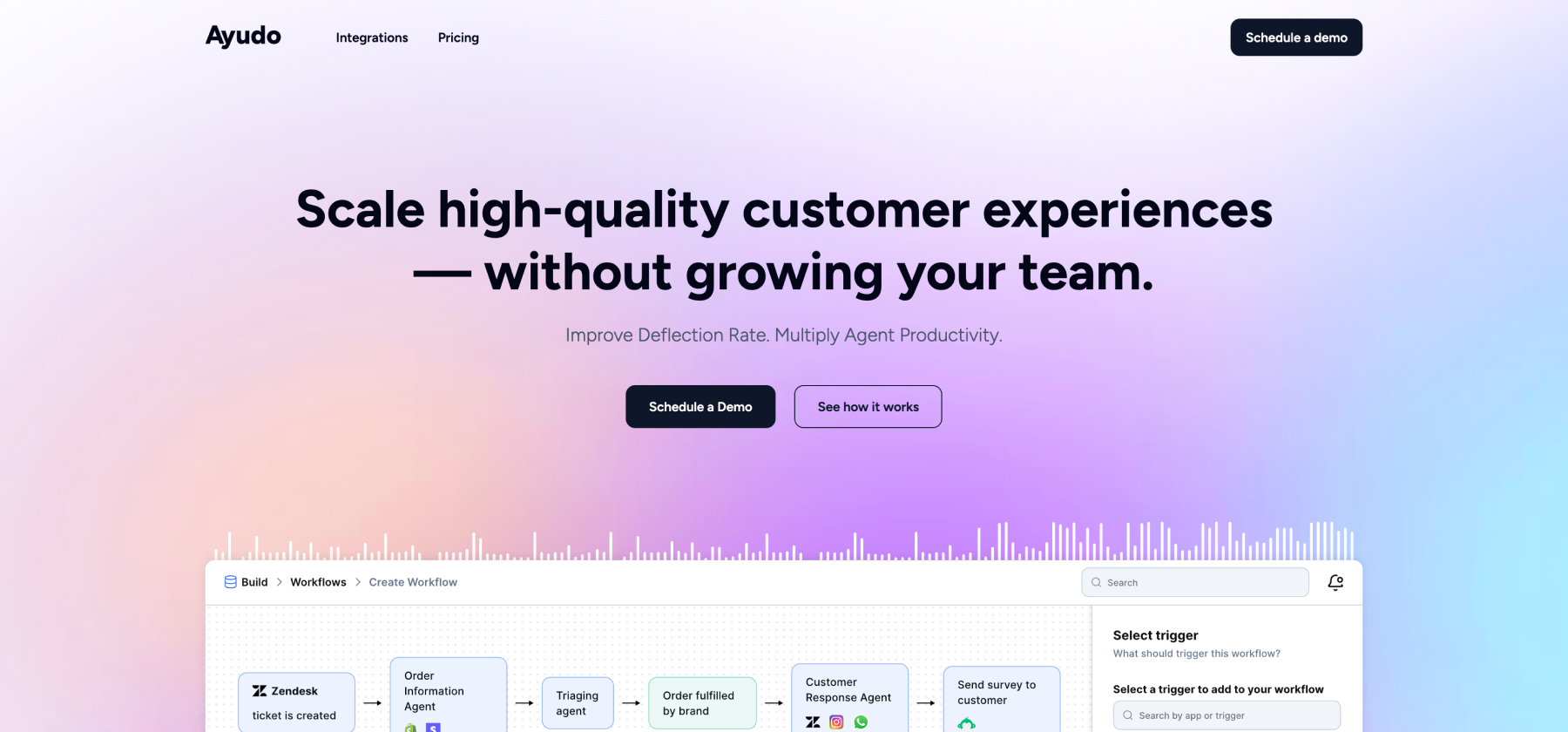
Best for: Organizations needing intelligent ticket management with extensive automation
Strengths:
- Multi-channel ticket creation: Email, WhatsApp, Slack, Discord, phone, and more convert to unified tickets
- Multi-AI agent collaboration: Specialized agents handle routing, classification, response generation, and workflow execution
- Launch in under 60 minutes: Fastest deployment among enterprise ticketing systems
- Proactive agent copilot: Real-time suggestions for ticket handling, routing decisions, and response drafting
- Custom scenario analysis: AI-driven insights identifying ticket patterns, bottlenecks, and improvement opportunities
- Extensive automation: 3000+ app integrations enabling complex workflow orchestration
- Smart routing: AI assigns tickets based on content, urgency, agent skills, and current workload
- Voice copilot: Talk-to-type assistance for phone-based tickets
- Admin insights: Ask and analyze any conversation or ticket pattern for instant understanding
Unique Capabilities:
- Bring your own helpdesk (works with Zendesk, Freshdesk, Intercom, Salesforce, Hubspot)
- Inbound + outbound ticketing for proactive customer support and outreach
- A/B testing for routing and workflow experiments
- KB gap analysis identifying missing documentation
- Real-time knowledge sync from multiple sources
Considerations:
- Newer platform with growing ecosystem
- Custom pricing model with a good ROI
- May be more sophisticated than teams needing basic ticketing
What Makes It Different: Most ticketing systems treat all tickets the same. Ayudo's multi-AI agent architecture means specialized agents handle different ticket types and workflow stages, some route automatically, others assist humans, all orchestrated based on ticket complexity and business rules.
Zendesk - Enterprise Ticketing Platform
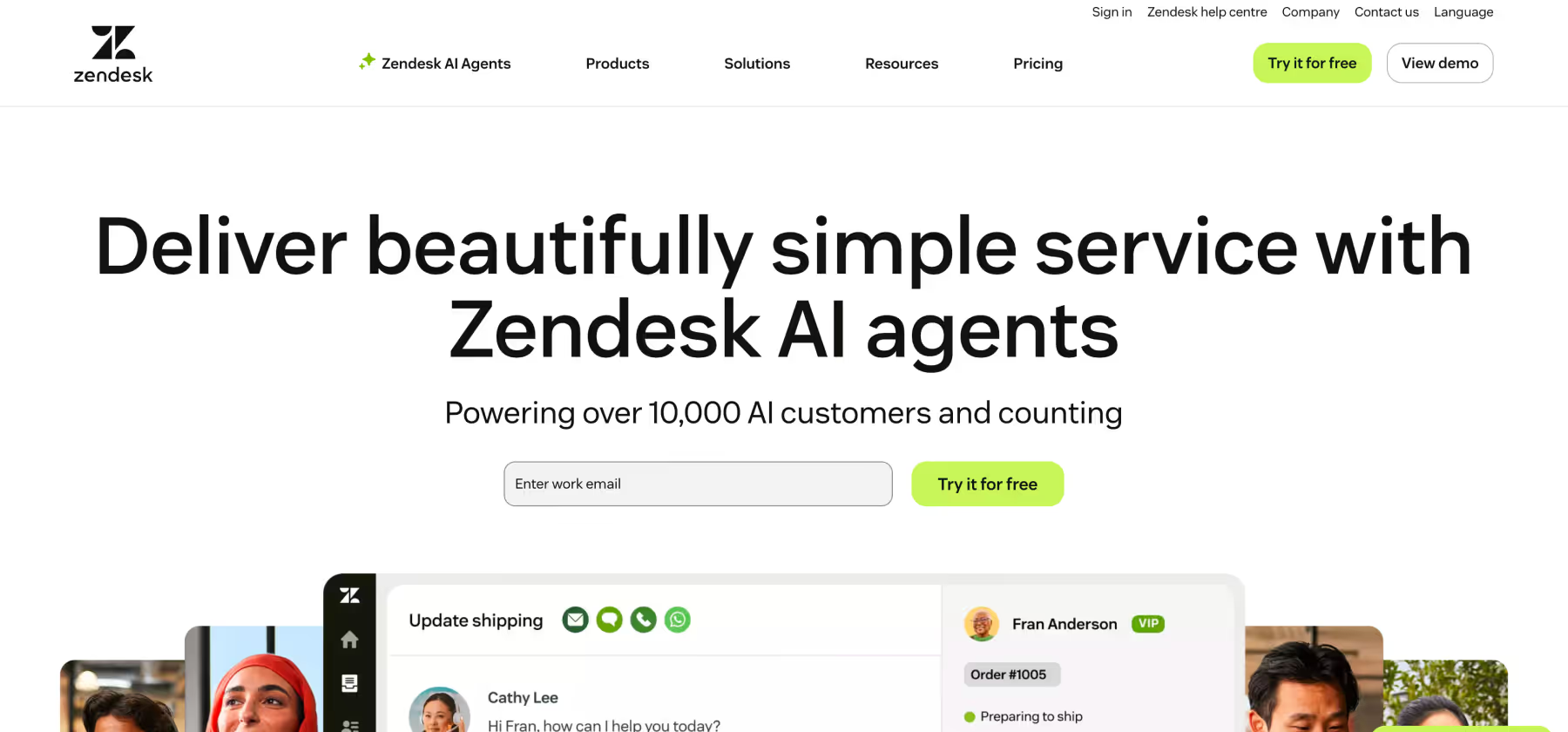
Best for: Large enterprises with existing Zendesk infrastructure
Strengths:
- Mature ticketing platform with extensive capabilities
- Advanced ticket routing and automation
- Comprehensive SLA management
- Extensive app marketplace
- Strong reporting and analytics
- Answer Bot for AI-assisted responses
Limitations:
- Complex implementation (weeks required)
- Expensive at scale ($$$ pricing)
- AI capabilities feel supplementary
- Steep learning curve
- High total cost of ownership
Pricing: $$$ range with multiple tiers
Freshdesk - Affordable All-in-One Ticketing
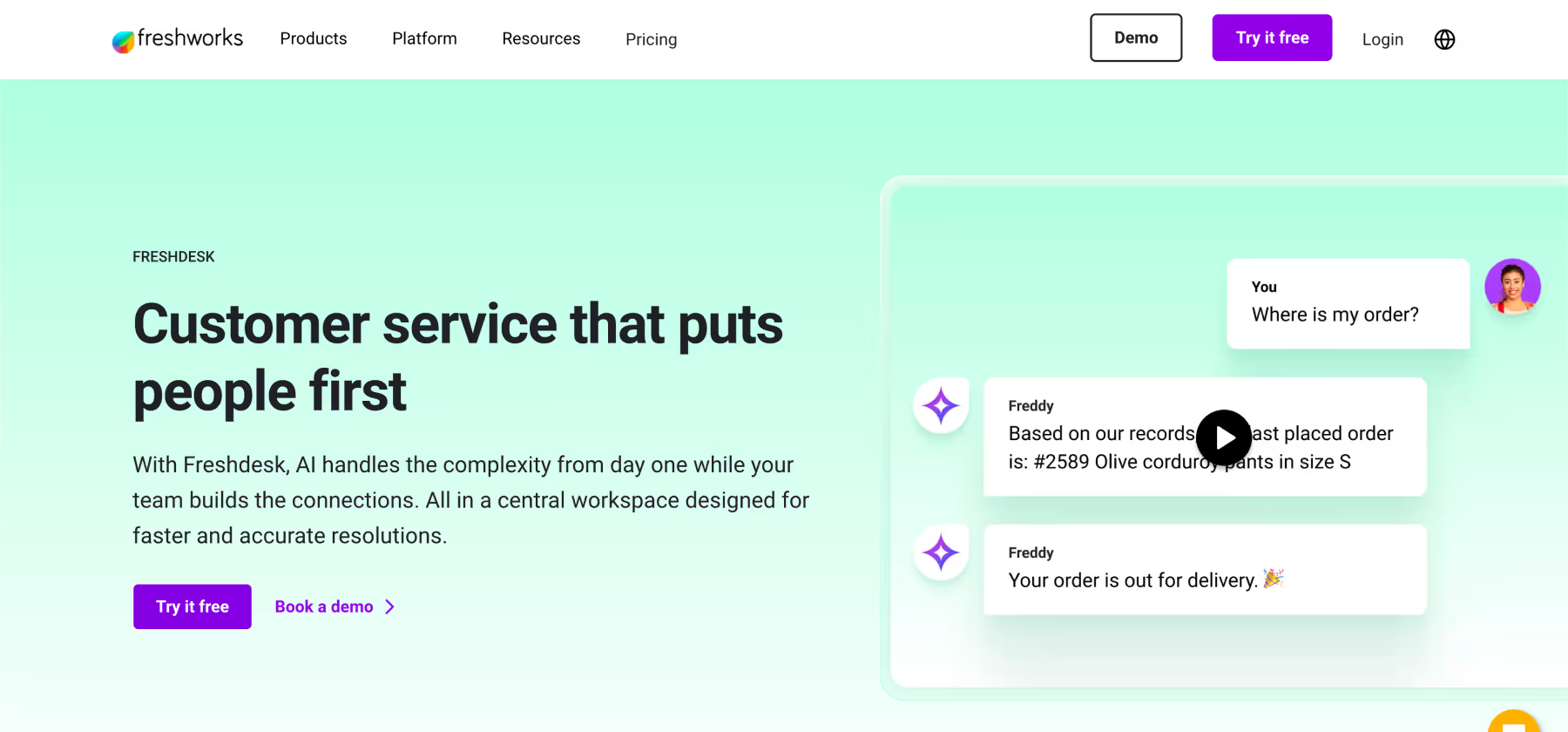
Best for: Growing teams wanting comprehensive features at competitive pricing
Strengths:
- Comprehensive ticketing features at affordable price
- Freddy AI for basic routing and automation
- Multi-channel ticket creation
- Good workflow automation
- Strong mobile app
- Free plan available for small teams
Limitations:
- AI capabilities basic compared to specialized platforms
- No multi-AI agent architecture
- Setup requires days of configuration
- Advanced features locked to higher tiers
Pricing: $$ range (Free plan with limitations)
Zoho Desk - Budget-Friendly Ticketing
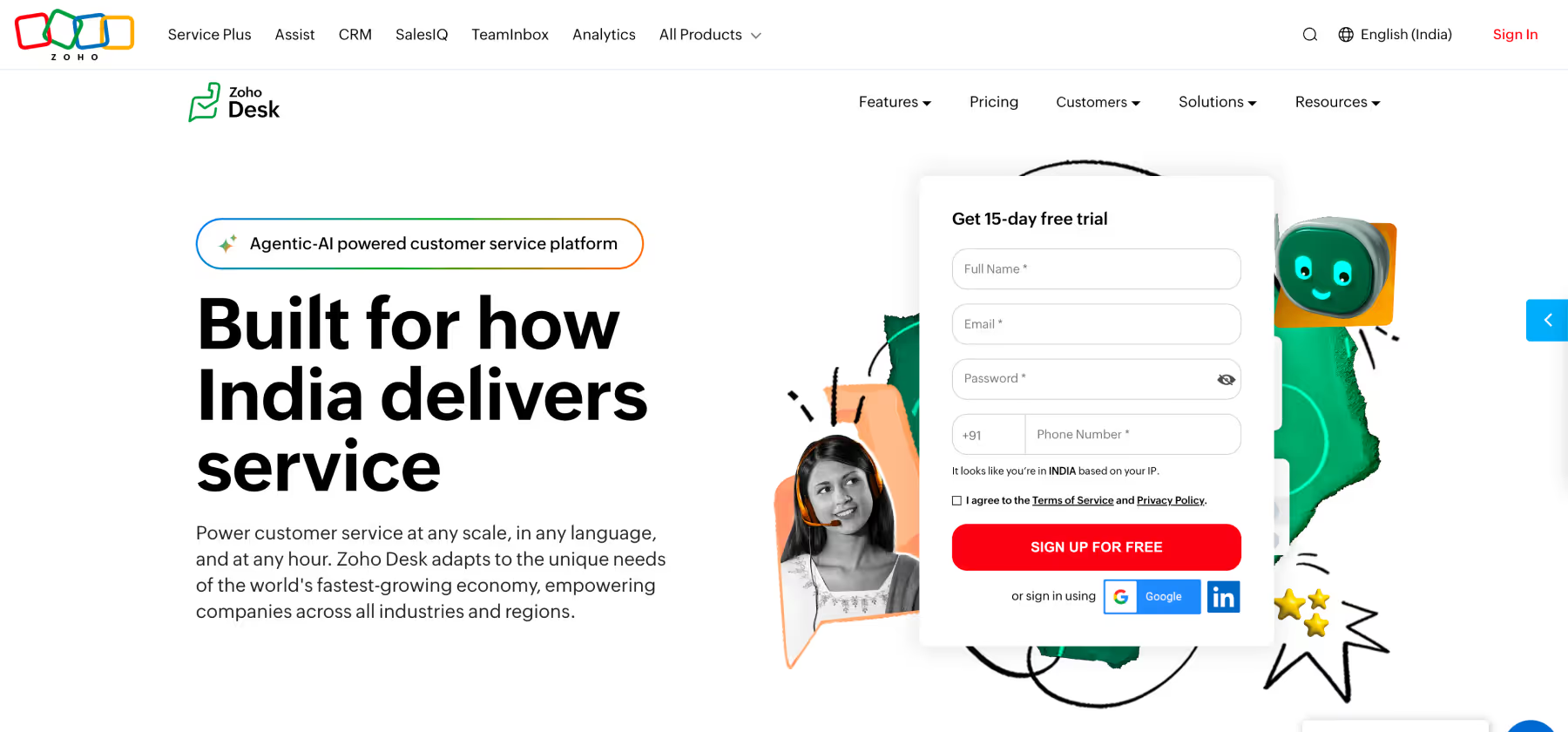
Best for: Small to mid-sized businesses prioritizing value
Strengths:
- Very affordable ($ range)
- Zia AI for basic automation
- Multi-channel ticketing
- Integration with Zoho ecosystem
- Customizable workflows
- Blueprint workflow builder
Limitations:
- AI capabilities limited
- Basic analytics compared to premium platforms
- Per-agent pricing adds up at scale
- Smaller integration ecosystem
Pricing: $ range, very competitive
Salesforce Service Cloud - Enterprise CRM Ticketing
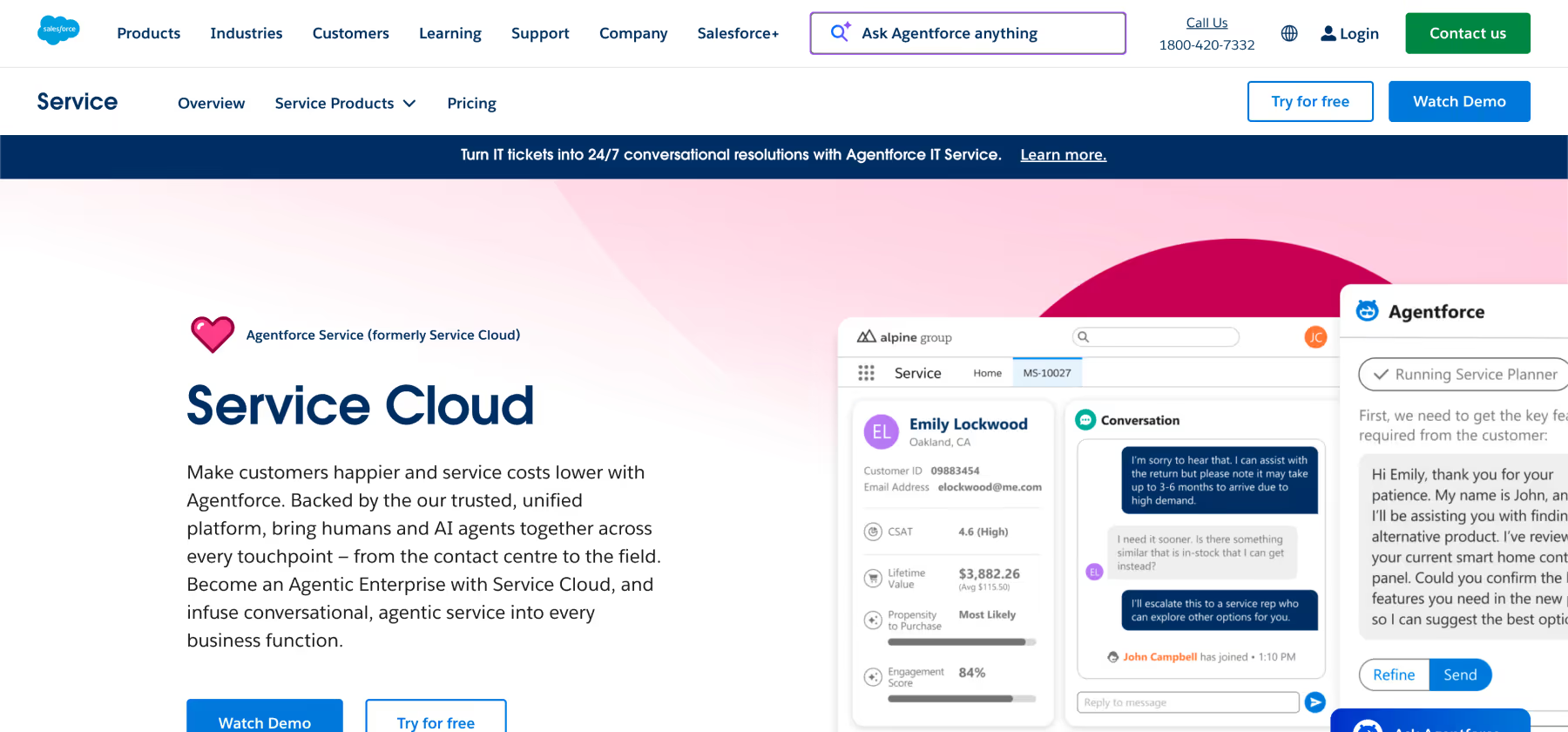
Best for: Large enterprises already using Salesforce
Strengths:
- Deep CRM integration for complete customer view
- Einstein AI for predictive routing
- Extensive customization capabilities
- Advanced case management
- Enterprise-grade security
Limitations:
- Extremely expensive ($$$$$ pricing)
- Complex implementation (months required)
- Requires Salesforce platform adoption
- Steep learning curve
- Best value only for Salesforce customers
Pricing: $$$$$ range (enterprise pricing)
HubSpot Service Hub - CRM-Integrated Ticketing
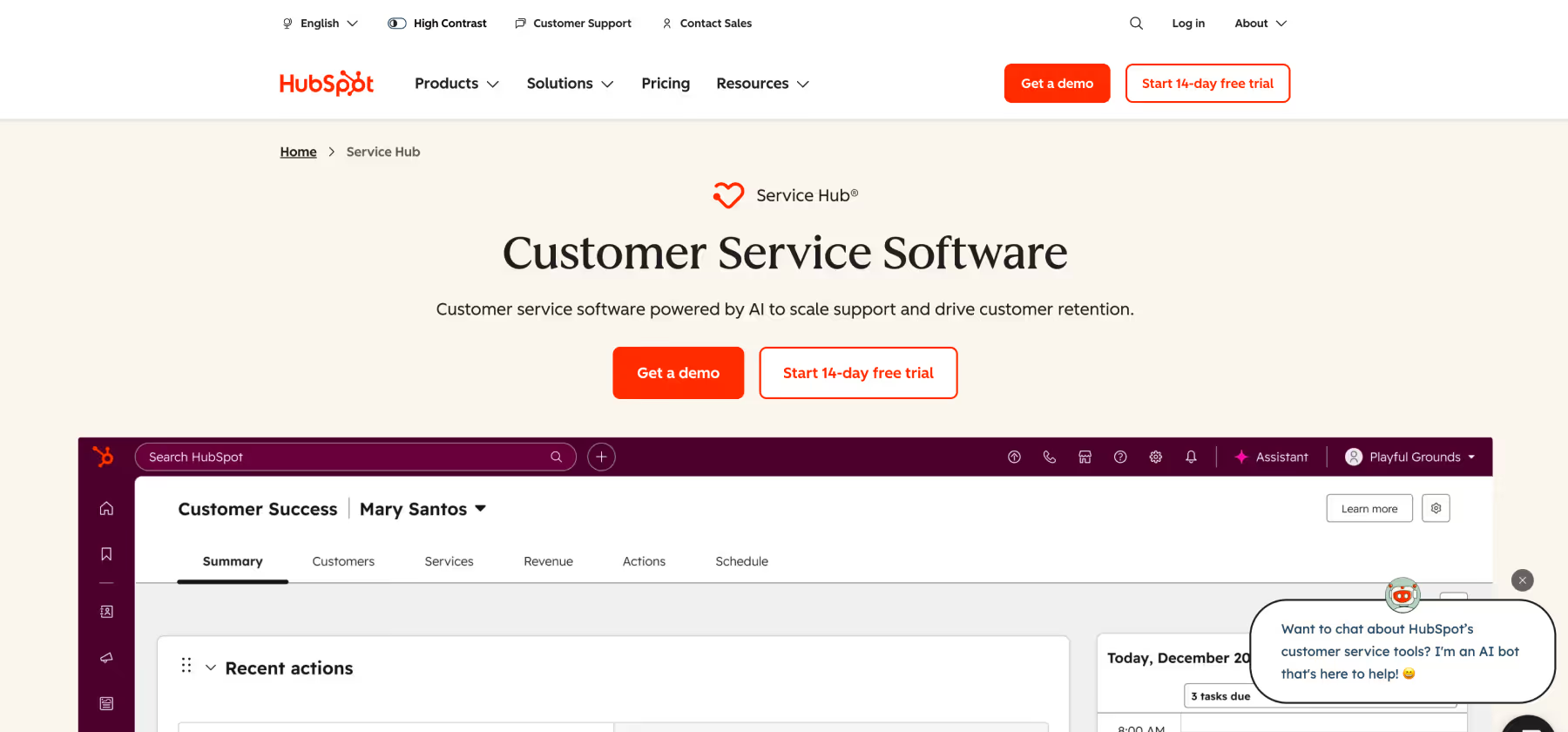
Best for: Companies already using HubSpot CRM
Strengths:
- Seamless CRM integration
- Unified customer view across sales and service
- Conversation routing and automation
- Knowledge base included
- Free tier available
Limitations:
- Best value only with full HubSpot suite
- Basic AI capabilities
- Advanced features require expensive tiers
- Limited standalone ticketing functionality
Pricing: $$-$$$ depending on tier
Forethought - AI-Powered Ticketing Automation
Best for: Teams wanting ML-driven ticket automation
Strengths:
- Solve (autonomous AI) for ticket deflection
- Assist (agent copilot) for ticket handling
- Discover (analytics) for ticket insights
- Advanced ML capabilities
- Good integration options
Limitations:
- Text only (no voice ticketing)
- Implementation takes days to weeks
- Limited workflow automation vs specialized platforms
- Mid-high pricing range
Pricing: $$$ range
Aisera - Enterprise AI Ticketing
Best for: Large enterprises with multi-department ticketing needs
Strengths:
- Comprehensive AI across departments
- 150+ language support
- Advanced workflow automation
- Multi-domain ticketing (IT, HR, customer service)
- Sentiment analysis
Limitations:
- Enterprise-only (complex for smaller teams)
- Expensive custom pricing
- Long implementation timeline
- Limited customer reviews
Pricing: Custom enterprise pricing
Talkdesk - Contact Center Ticketing

Best for: Large contact centers prioritizing voice
Strengths:
- Strong voice ticketing and IVR
- Contact center optimization
- Real-time agent assistance
- Quality management features
- Enterprise-grade security
Limitations:
- Voice-focused (digital ticketing secondary)
- Expensive enterprise pricing
- Complex implementation
- Locked into Talkdesk ecosystem
Pricing: Custom enterprise pricing
Help Scout - Simple Email Ticketing
Best for: Small to mid-sized teams prioritizing email
Strengths:
- Simple, email-like interface
- Easy to learn and adopt
- Affordable pricing ($$)
- Shared inbox collaboration
- Basic ticketing workflows
Limitations:
- Email-centric (limited other channels)
- Basic AI capabilities
- Limited automation
- Simple reporting
- Not built for complex workflows
Pricing: $$ range
Tidio - Chat-First Ticketing
Best for: Small businesses prioritizing live chat
Strengths:
- Very affordable ($ range)
- Easy setup (hours)
- Live chat focused
- Basic ticketing features
- Mobile app
Limitations:
- Chat-focused (limited ticketing)
- No voice support
- Very basic ticket workflows
- Limited AI capabilities
- Not built for complex support operations
Pricing: $ range, free tier available
Key Use Cases for Ticketing Systems
Customer Support Ticketing
Goal: Convert customer inquiries from all channels into trackable, manageable tickets
Best Platform: Ayudo or Freshdesk
- Multi-channel ticket creation (email, chat, social, messaging apps)
- Automatic ticket routing and assignment
- SLA tracking and escalation
- Customer conversation history
- Ticket priority and categorization
Success Metrics:
- First response time reduction
- Faster ticket resolution
- Higher customer satisfaction scores
- Lower ticket backlog
IT Helpdesk Ticketing
Goal: Manage internal IT support requests with incident and problem tracking
Best Platform: Ayudo, ServiceNow, or Jira Service Management
- Incident and problem management
- Asset tracking and configuration
- Change management workflows
- Service catalog for common requests
- Knowledge base integration
Key Features Needed:
- ITIL compliance frameworks
- Integration with IT tools (monitoring, asset management)
- Escalation procedures
- SLA management by severity
- Internal employee portal
Business Value:
- Reduced IT issue resolution time
- Better asset and change management
- Improved employee productivity
- Clear IT performance metrics
E-Commerce Support Ticketing
Goal: Handle order inquiries, returns, and customer service efficiently
Best Platform: Ayudo or Freshdesk
- Order management integration
- Automated order status tickets
- Return and exchange workflows
- Payment issue tracking
- Shipping delay notifications
Integration Needs:
- E-commerce platform (Shopify, Magento, WooCommerce, Bigcommerce)
- Order and inventory systems
- Shipping carriers
- Payment processors
- Customer database
ROI Impact:
- Faster order inquiry resolution
- Reduced return processing time
- Lower cart abandonment
- Higher customer lifetime value
Multi-Department Ticketing
Goal: Unified ticketing across customer service, IT, HR, and operations
Best Platform: Ayudo or Aisera
- Department-specific ticket workflows
- Role-based routing and access
- Multi-brand ticket portals
- Cross-department collaboration
- Unified reporting
Department Coverage:
- Customer support
- IT helpdesk
- HR employee services
- Facilities management
- Finance inquiries
Enterprise Benefits:
- Consistent ticketing process
- Reduced operational costs
- Better resource allocation
- Improved satisfaction across stakeholders
Implementation Strategy
Pre-Implementation Planning
Process Assessment
- Map current inquiry handling process
- Identify pain points (dropped tickets, unclear ownership, slow response)
- Define ticket categories and priority levels
- Establish SLA requirements by ticket type
- Determine integration needs with business systems
Team Preparation
- Identify stakeholders and ticket managers
- Define agent roles and permissions
- Plan training approach
- Establish success metrics and KPIs
- Create change management plan
Content and Data Prep
- Prepare canned responses and templates
- Organize knowledge base content
- Define ticket tags and categories
- Set up escalation procedures
- Prepare historical data for migration (if applicable)
Deployment Phases
Phase 1: Configuration (Week 1-2)
- Set up ticket categories, priorities, and statuses
- Configure team structure and permissions
- Create routing rules and assignment logic
- Set up SLA definitions and alerts
- Integrate primary communication channel (usually email)
Phase 2: Automation and Integration (Week 3-4)
- Configure automation rules and triggers
- Integrate additional channels (chat, phone, social)
- Connect business systems (CRM, order management, etc.)
- Set up canned responses and macros
- Test workflows with internal team
Phase 3: Pilot Launch (Week 5-6)
- Deploy to limited ticket volume (10-20%)
- Monitor ticket handling and agent feedback
- Refine routing and automation rules
- Address technical issues
- Optimize based on real usage patterns
Phase 4: Full Deployment (Week 7-8)
- Expand to all incoming tickets
- Implement advanced automation
- Optimize performance based on metrics
- Establish ongoing maintenance procedures
- Create continuous improvement process
Change Management
Agent Training
- Provide hands-on training with ticket scenarios
- Create quick-reference guides
- Identify champions to support peers
- Establish feedback channels
- Monitor adoption and provide coaching
Process Documentation
- Document ticket workflows and procedures
- Create SLA guidelines and escalation paths
- Establish quality standards
- Define reporting and review processes
Best Practices for Ticketing Success
Ticket Classification and Routing
Effective Categorization
- Use clear, consistent ticket categories (billing, technical, general inquiry)
- Tag tickets for detailed filtering (product, feature, issue type)
- Set priority based on impact and urgency
- Assign tickets to appropriate team or agent skills
- Track ticket status through resolution (new, open, pending, resolved, closed)
Smart Routing Rules
- Route tickets based on content keywords
- Assign by customer tier or account value
- Balance workload across agents
- Escalate high-priority tickets automatically
- Route to specialized teams for complex issues
Priority Management
- Define priority levels clearly (critical, high, medium, low)
- Set priorities based on objective criteria (impact × urgency)
- Use automation to flag urgent tickets
- Establish priority-based SLAs
- Regular priority review and adjustment
SLA Management
Realistic SLA Definition
- Set different SLAs by ticket type and priority
- Define first response time targets
- Establish resolution time expectations
- Consider business hours vs. 24/7
- Make SLAs achievable with current resources
SLA Monitoring and Alerts
- Set up automated SLA breach alerts
- Monitor approaching SLA deadlines
- Track SLA compliance rates
- Identify SLA breach patterns
- Report on SLA performance regularly
SLA Optimization
- Adjust SLAs based on performance data
- Differentiate by customer tier if needed
- Update as team capacity changes
- Benchmark against industry standards
Automation Best Practices
Strategic Automation
- Automate ticket creation from all channels
- Use auto-assignment based on skills and workload
- Implement canned responses for common questions
- Set up automatic status updates
- Create follow-up and reminder automation
Balance Automation and Quality
- Don't over-automate at expense of personalization
- Provide easy manual override options
- Monitor automation effectiveness
- Adjust based on customer feedback
- Keep human oversight for edge cases
Ticket Quality and Resolution
Response Quality Standards
- Establish response tone and style guidelines
- Use templates for consistency
- Require complete information in responses
- Review ticket quality regularly
- Provide coaching based on performance
Resolution Verification
- Confirm issue actually solved before closing
- Request customer confirmation when appropriate
- Track reopen rates by agent and category
- Identify common incomplete resolutions
- Improve processes based on patterns
Reporting and Analytics
Key Metrics to Track
- First response time
- Average resolution time
- Ticket volume by channel, category, and priority
- SLA compliance rates
- Agent productivity (tickets handled, resolution time)
- Customer satisfaction scores (CSAT)
- Ticket reopen rates
- Backlog and aging tickets
Using Data for Improvement
- Identify common ticket types for automation or knowledge base expansion
- Optimize staffing based on volume patterns
- Recognize top-performing agents
- Address process bottlenecks
- Allocate resources based on ticket trends
- Demonstrate value to leadership
ROI Calculation Framework
Cost-Benefit Analysis
Annual Ticketing System Costs:
- Platform licensing: $1,500-$8,000
- Implementation and setup: $2,500-$10,000
- Integrations: $1,500-$5,000
- Training: $1,000-$2,500
- Ongoing maintenance: $500-$2,000/year
- Total First-Year Investment: $6,500-$27,500
Annual Benefits:
- Ticket resolution time improvement: (30-40% faster resolution × Agent hours saved) $6,000-$12,000
- Agent productivity gains: (Reduced manual work × Tickets handled) $5,000-$10,000
- Reduced ticket duplication and loss: (50% fewer duplicate tickets × Cost per ticket) $2,000-$5,000
- Self-service deflection: (Reduced escalations × Cost per escalation) $3,000-$6,000
- Total Annual Benefits: $16,000-$33,000
ROI = (Annual Benefits - Annual Costs) / Total Investment × 100
Year 1 ROI: ($24,500 - $17,000) / $17,000 × 100 = 44%
Year 2 ROI: ($24,500 - $1,250) / $17,000 × 100 = 136%
Example Calculation:
- Current monthly tickets: 3,000
- Time saved per ticket with system: 5 minutes
- Monthly time savings: 250 hours
- Agent hourly rate: $30
- Monthly value from efficiency: $7,500
- Reduced missed tickets: 10% recovery = 300 tickets/month
- Value of caught issues: $5,000/month
- Total monthly value: $12,500
- Annual value: $150,000
- Platform + implementation: $25,000
- First-year ROI: 500%
Value Realization Timeline
Months 1-2: Foundation
- Basic ticket tracking operational
- Eliminated dropped tickets
- Clear ownership established
- Expected value: 30-40% of potential
- Focus: Setup, training, process adoption
Months 3-6: Optimization
- Automation and routing active
- SLA tracking functional
- Knowledge base reducing ticket volume
- Expected value: 60-75% of potential
- Focus: Workflow refinement, scaling
Months 7-12: Maturity
- Full automation and analytics
- Predictive insights improving operations
- Self-service deflection maximized
- Expected value: 90-100% of potential
- Focus: Advanced features, continuous improvement
Frequently Asked Questions
Platform Selection
Ticketing systems focus specifically on converting inquiries into trackable tickets with status and workflow management. Helpdesk software is broader, including ticketing plus features like knowledge bases, live chat, and customer portals. Many modern platforms (like Ayudo) combine both.
Cloud-based systems offer faster deployment, automatic updates, and lower upfront costs. On-premise provides more control and may be required for compliance in regulated industries. Most organizations choose cloud for flexibility and lower total cost of ownership.
Most teams hit breaking points around 50-100 tickets per month or 2-3 support agents. If you're losing track of tickets, lacking clear ownership, or unable to measure performance, you need a ticketing system regardless of team size.
Implementation
Timeline varies dramatically. Simple systems (Help Scout, Tidio) deploy in hours. Traditional platforms (Zendesk, Freshdesk) require days to weeks. Modern AI platforms like Ayudo can launch in under 60 minutes but may take weeks to fully optimize.
Yes, most platforms support ticket migration including history, attachments, and customer information. Migration complexity depends on data volume and current system. Plan for 1-2 weeks for migration and testing during implementation.
Basic ticketing requires minimal technical knowledge for day-to-day use. However, complex integrations, custom workflows, and advanced automation benefit from technical support during setup. Modern platforms offer no-code interfaces for common tasks.
Features and Capabilities
Routing is the automated process of directing tickets to the right team or queue based on rules (keywords, channel, customer tier). Assignment is allocating a specific ticket to an individual agent, which can be automatic (based on workload, skills) or manual.
Critical for teams with service commitments. SLA management ensures tickets are handled within promised timeframes, prevents SLA breaches through alerts, and provides accountability. Essential for enterprise support; less critical for small informal teams.
Yes, many platforms support voice ticketing (Ayudo, Zendesk, Talkdesk, Freshdesk). Capabilities range from basic call logging to advanced features like IVR, automatic ticket creation from calls, call recording, and AI-powered voice agents.
ROI and Business Impact
Organizations typically see 300-600% first-year ROI through improved efficiency, eliminated dropped tickets, better accountability, and measurable performance. Specific ROI depends on current chaos level, ticket volume, and implementation quality.
Productivity improvements come from multiple sources: eliminated time searching for information, automated routing and assignment, canned responses for common issues, clear prioritization, collision detection preventing duplicate work, and knowledge base integration for faster answers.
Basic benefits (tracking, accountability, no dropped tickets) appear immediately upon deployment. Efficiency gains materialize within 1-2 months as agents become proficient. Full value realization (automation, analytics, optimization) typically takes 3-6 months.
Automation and AI
Common automations include: ticket creation from any channel, automatic routing and assignment, priority setting based on keywords, SLA alerts and escalation, canned responses for common questions, status updates, follow-up reminders, and satisfaction surveys after closure.
AI enhances ticketing through intelligent routing (analyzing ticket content to assign optimally), response generation (suggesting or drafting replies), sentiment analysis (flagging upset customers), predictive analytics (identifying patterns), and continuous learning (improving accuracy over time).
No, AI augments rather than replaces. AI handles routine classification, routing, and simple responses, freeing humans for complex issues requiring empathy, judgment, and creativity. The most effective systems (like Ayudo's multi-AI agent approach) balance AI automation with human expertise.
Multi-Channel and Integration
Yes, advanced ticketing systems (Ayudo, Zendesk, Freshdesk) thread conversations across channels. A customer might start via email, follow up on chat, and call all appearing as one ticket with complete history. This requires omnichannel ticketing capability.
Critical integrations include: email (for ticket creation), CRM (for customer context), knowledge base (for agent answers), business systems enabling ticket resolution (order management, billing, user databases), and communication tools (Slack for agent collaboration).
Ready to implement a ticketing system that brings order to support chaos?
The right platform eliminates dropped tickets, establishes clear accountability, and makes every metric measurable. Focus on matching the system's capabilities to your ticket complexity and channel mix, not just solving today's immediate pain point.
This guide was last updated in 2026. For current pricing and platform capabilities, consult directly with solution providers.